21st Century Kids: Kindness and Empathy

  • Published
  • Updated
Smiling, diverse kids walking side by side in a grassy playground

Kindness involves an action, intent, and empathy towards another person. Most of all, the desire for kindness to others is, at its core, a learned behavior. Children learn how to be kind by being exposed to people exhibiting kind behavior. Therefore, parents and caregivers that want children to adopt kindness as a character trait must encourage the behaviors through their own actions.

Kindness

Kindness boards a bus
Kindness stands so you can sit.
Kindness unwraps a sandwich and gives you the bigger half. —Irene Latham
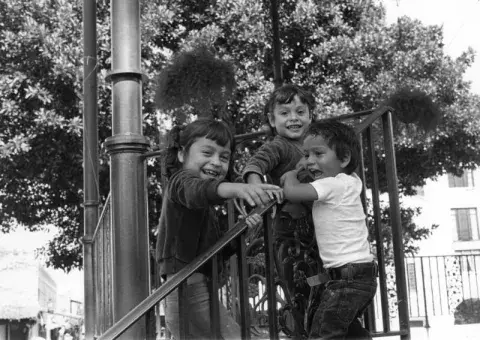
Children playing in the Plaza
Children playing in the Plaza, [1980]. Photo credit: William Reagh Collection

Kindness involves inclusion. As long as children view people differently than themselves as “others,” and less then, the exclusion will become a painful experience for many. No parent or caregiver wants to be on the receiving end of hearing their child was excluded or vice versa. Therefore, children need to accept everyone is a human being, no matter their differences.

“If we have no peace, it is because we have forgotten that we belong to each other.” —Mother Teresa
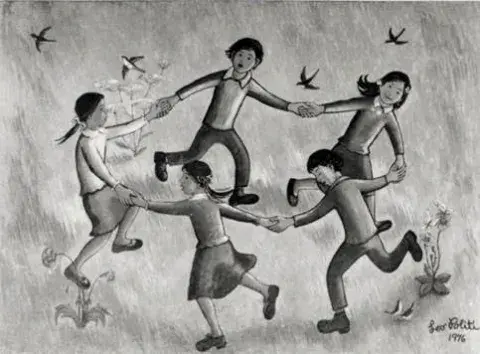
Mural of children playing ring around the rosy by Leo Politi
Mural of children playing ring around the rosy by Leo Politi, at Castelar Elementary School, near the entrance, [1983]. El Pueblo Monument Photo Collection

Children have multiple platforms to practice acts of kindness. This can occur both in a virtual world and face-to-face interaction. Here is a list of resources that encourages kind choices when interacting with others.

Book List for Encouraging Kindness


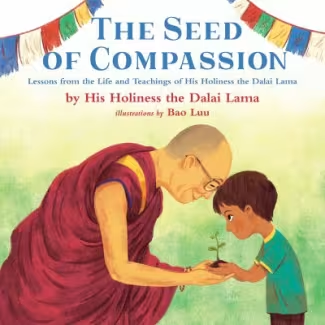
Cover image for The Seed of Compassion

The Seed of Compassion

Imagine being a small child and being selected to be the 14th Dalai Lama. His Holiness the Dalai Lama shares with children his upbringing and experiences demonstrating lessons of kindness and compassion throughout his life.

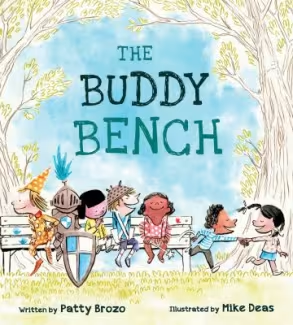
Cover image for The Buddy Bench

The Buddy Bench

Sometimes kids are so busy playing they don’t notice the child who is sitting alone. In this delightful picture book, a group of kids suggest to their teacher to implement a “Buddy Bench,” so no child will be excluded. The bench becomes a place where excluded kids send a nonverbal message they want an invitation to play. This wonderful idea has been implemented in school playgrounds over the United States and Germany.

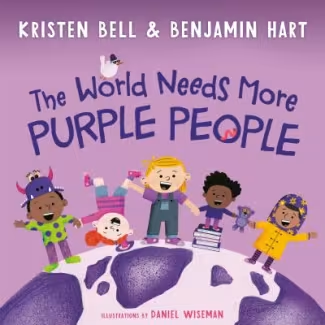
Cover image for The World Needs More Purple People

The World Needs More Purple People

A purple person would definitely be noticed in a crowd. Authors Kristin Bell and Benjamin Hart, use the color purple to explore that we are all individuals and, therefore, different from each other. However, despite our differences, as humans we share more in common than realized.

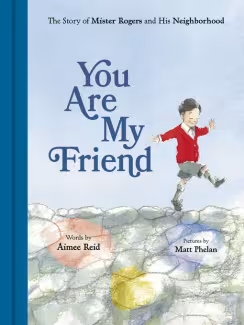
You Are My Friend

You Are My Friend

Fred Rogers' gentle ways demonstrated to young children that kindness and compassion were accessible and achievable. Mr. Rogers grew up a sickly child and learned about kindness when he was encouraged by his family to embrace the “helpers,” in his neighborhood. Knowing what exclusion felt like, Mr. Rogers transformed children’s programming by relaying kindness, and gentleness to his young audience. Author Aimee Reid’s tribute celebrates Fred Rogers' life and his mission to make the world a kinder place.

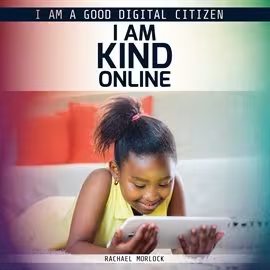
I Am Kind Online

I Am Kind Online

This guide explains to young Internet users how to be good digital citizens. The author covers topics such as cyberbullying, including others, and thinking before sending an unkind message.

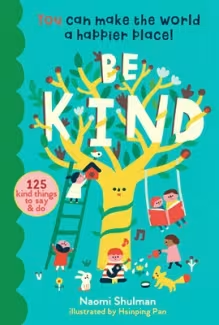
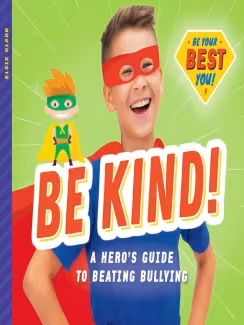
Be Kind!

Be Kind!

This title offers kids the tools they need to stop bullying in its tracks, The author provides a list referred to as “super powers,” such as compassion, empathy, and good deeds. In addition, kids learn through choices and actions employed, they are empowered to help others experiencing bullying behavior.