Hydroponic Gardening

  • Published
  • Updated
Book covers of recommended hydroponic gardening books

The name hydroponics for the practice of growing plants using only water, nutrients and a growing medium—i.e., without soil—was coined in 1937 by UC Berkeley scientists Dr. William Setchell and Dr. William Gericke. The name derives from hydro, the Greek word for water, and ponos, the Greek word for labor. The technique is much older than the name, however, as the Hanging Gardens of Babylon (ca. 562 BCE), one of the Seven Wonders of the Ancient World, apparently employed the technique. The Aztecs and ancient Chinese also independently developed hydroponic growing methods.

The advantages cited for soil-less growing of plants through hydroponic techniques are honestly too numerous to list here in full. Among these are greater yields, much faster growing times, more holistic technology, higher produce quality, reduced operating costs, reduced plant spacing, no dirt or weeds, better plant disease control, and even the possibility of growing food during space travel! There is no time like the present to learn a new technique for growing healthy, nutritious food right in the comfort of our own homes—information that any of the following books will provide! Included is one children’s book.


Hydroponic Gardening Recommendations


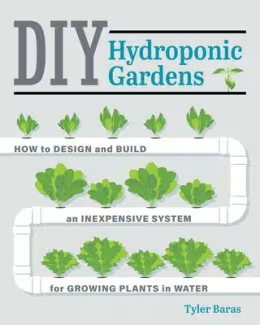
Cover image for DIY Hydroponic Gardens

DIY Hydroponic Gardens

Author Tyler Baras provides photographic step-by-step instructions for how to create, plant and maintain more than a dozen hydroponic systems. The book includes recipes for nutrient solutions and light and ventilation options. The author has a BS in Horticultural Sciences from the University of Florida, and has managed hydroponic farms throughout the United States.

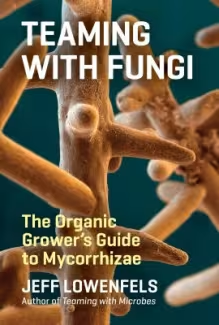
Cover image for Teaming With Fungi: The Organic Grower's Guide to Mycorrhizae

Teaming With Fungi: The Organic Grower's Guide to Mycorrhizae

Anchorage, Alaska garden writer Jeff Lowenfels provides an introduction to the science of fungi, and the importance of fungi in horticulture, including hydroponics. A back cover note lists improved drought tolerance, resistance to disease and increased fruiting as the benefits of mycorrhizal fungi for plant performance. The book won the Garden Writers of America Gold Award in 2011.

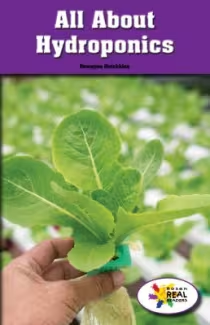
Cover image for All About Hydroponics

All About Hydroponics

Part of the Rosen REAL Readers series for children ages 6-7 years, this book provides basic information on concepts of hydroponics. The book is only 12 pages long, and could perhaps be combined with one of the other available ebooks for learning for both children and adults at the same time.

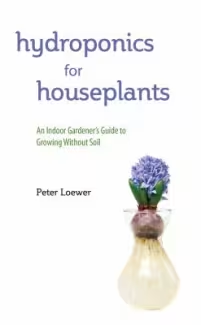
Cover image for Hydroponics for Houseplants

Hydroponics for Houseplants

The back cover blurb for this book promises, “This book is the answer to anyone who has ever shied away from growing houseplants because of messy dirt or fear of brown, dying leaves if left for a few days without water.” Hydroponics enthusiast Loewer wrote and illustrated this basic guide.

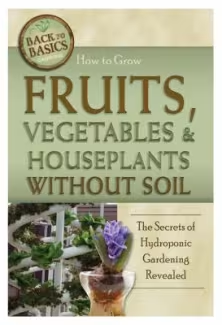
Cover image for How to Grow Fruits, Vegetables & Houseplants Without Soil

How to Grow Fruits, Vegetables & Houseplants Without Soil

The back cover blurb for this book calls it “heavily researched” and says that it features “a multitude of interviews with scientists, hobbyists and greenhouse-savvy experts.” Included are separate chapters on systems, growing media, nutrient solutions and environmental controls, as well as instructions on setting up your own system.

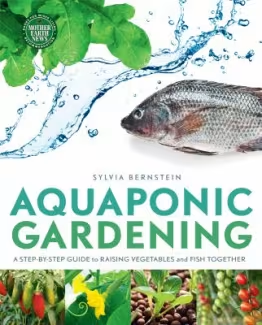
Cover image for Aquaponic Gardening

Aquaponic Gardening

Author Sylvia Bernstein explains that aquaponics is “the cultivation of fish and plants together in a constructed, recirculating ecosystem utilizing natural bacterial cycles to convert fish waste to plant nutrients.” The book is divided into sections on the plan, the hardware (grow beds, water, etc.), the software (fish and plants, etc.), and operation.