
Monitoring Air Quality II (iOS/Android)
Why Do Scientists Monitor Air Quality?
Humans, animals, and plants all need clean air to live and thrive. Monitoring air quality in your neighborhood identifies areas where pollution is a problem and helps researchers find solutions.
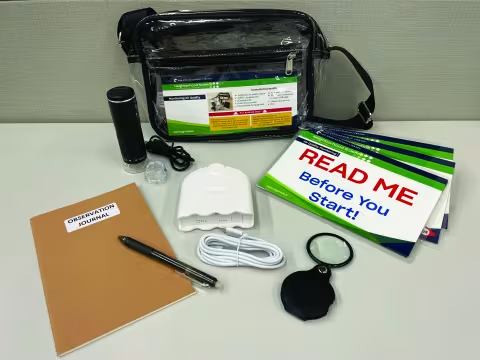
What's in the Kit?
- 1 AirBeam3 air quality sensor
- 1 USB-C charging cord
- 1 Carabiner clip
- 1 WiFi Digital Microscope
- 1 Micro-USB data/charging cable
- 1 10x Magnifying glass
- 1 Observation journal
- 1 Pen
- 1 instructions packet
Instructions & Interpreting Your Data
Important Notes
- A smart device is not included in this kit.
- AirBeam3 air sensor is iOS and Android-compatible.
- The Library version of the AirBeam3 air quality sensor is not equipped to record fixed-location sessions using cellular networks. The AirBeam3 air sensor is iOS and Android-compatible
- Before using the AirBeam3 air quality sensor, make sure the sensor is fully charged. When the sensor is not in use, power it off.
- Wi-Fi network and Bluetooth are required to download, install, and set up the AirCasting app and the AirBeam3 air sensor.
- Do not cover the sensor air inlet or exit.
- The AirBeam3 air quality sensor in the kit is water-resistant, not waterproof. Make sure to protect the sensor in the rain by using an umbrella.
- Keep the smart device that is paired with the AirBeam3 sensor within 10-20 feet of each other when connected via Bluetooth.
- The AirBeam3 air quality sensor only measures particulate matter; it does not measure gaseous pollutants.
- The AirBeam3 does not measure airborne viruses like the flu or COVID-19.
Monitoring Air Quality Curriculum
Lessons
Lessons are short moments of NGSS (Next Generation Science Standards)- aligned direct instruction, delivered in video or slide format, that inform participants of the knowledge necessary to participate in Citizen Science activities.
Activities
Activities frame moments of Citizen Science participation through hands-on exploration and creation, including using the Neighborhood Science kits to collect data.