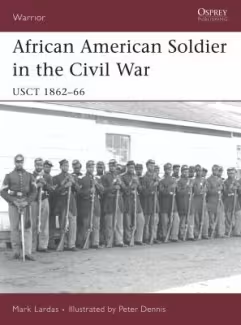
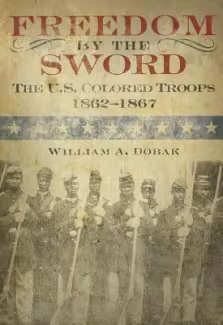
A concise introduction to the experience of United States Colored Troops, encompassing enlistment, training, dress, daily life, and the aftermath of the war. Uses many excerpts from soldiers’ memoirs and oral histories.
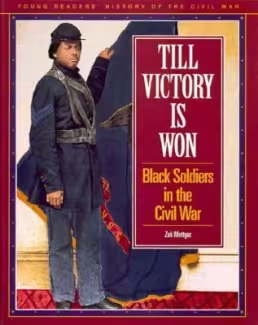
A history of black soldiers in the Civil War for the Young Adult audience. Discusses the initial reluctance to enlist black soldiers, their use for manual labor instead of combat, their determination to prove themselves on the battlefield, and their struggle for equal pay. Richly illustrated with photographs and drawings.
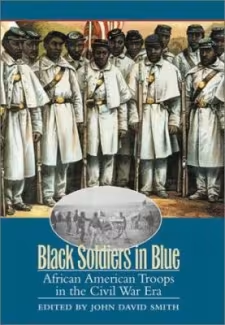
This comprehensive history of African Americans serving in the United States Army brings to life the free and slave-born, literate and illiterate, brave and ill-prepared men who made up the USCT.
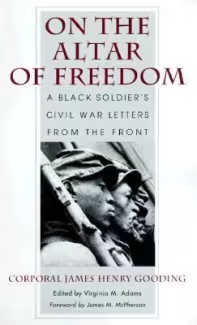
Remarkable series of 48 letters from Corporal James Henry Gooding, a member of the renowned 54th Massachusetts regiment (the unit was the subject of the movie Glory), to the New Bedford Mercury. Augmented with annotations and appendixes.
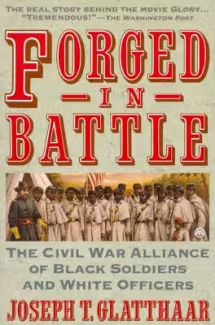
Examines the complex relationship between the white officers put in charge of the 166 black regiments in the Union Army. Though divided by preconceptions and racial tensions, the troops and their officers were united by the trials and tribulations of the war they fought side by side.
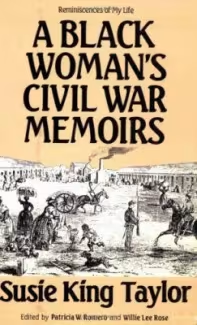
This slim volume of the random recollections of Susie King Taylor tells military history from the viewpoint of a woman. Taylor was born a slave, and after gaining her freedom early in the war served as a laundress for the first black regiment of the United States. As Colonel Higginson states in the introduction, this is “the plain record of simple lives led in stormy times.”
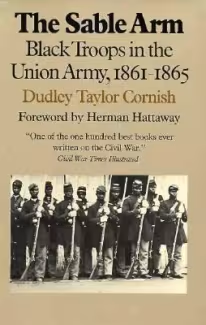
Part of the Army Historical Series, this is a thoroughly researched account of how black regiments were formed, their battlefield accomplishments, and how their actions influenced the outcome of the Civil War.
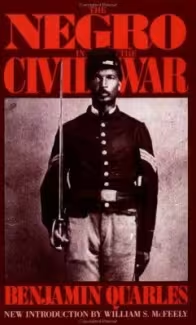
A comprehensive study detailing the role of blacks in the Civil War; “the Negro’s tale was not merely a passive one; he did not tarry in the wings, hands folded. He was an active member of the cast, prominent in the dramatis personae.”
Thomas Wentworth Higginson, a Unitarian minister and abolitionist, was a Union colonel in charge of training black troops. Originally published in 1870, these essays, though told from the viewpoint of a white officer, offer a detailed look at everyday camp life.
Published in Boston in 1867 and written by a former slave and reformer, this is the first book-length history of the African American soldier in the Union Army. Considered by many to be flawed because of a lack of documentation and verifiable sources, it is nonetheless invaluable in telling the dramatic story of the black soldiers’ role in the Union victory and their fight to end slavery and gain equality.