Get Prepared During Fire Safety Month!

Recently, California has suffered extreme heat and forest fires. As of October 5, the California Department of Forestry and Fire Protection (Cal Fire) reported that the number of acres burned during the 2020 fire season has exceeded 4 million. Unfortunately, fire season is far from over.
October is Fire Safety Month, and it is more important than ever to prepare for fire-related emergencies for your kids and educate them about fire safety. As I read about Californians fleeing their homes from the August Complex, Glass, and Creek fires, I wondered: Am I prepared for a fire-related emergency?
If you are wondering the same thing, the Los Angeles Public Library has you covered! We've got resources to talk to kids about fire safety, how to make an emergency kit, creating an emergency plan, and much more.
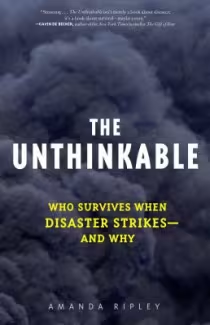
The Los Angeles Public Library's Emergency Preparedness page is a great resource when getting organized and prepared for any emergency, including fires. A comprehensive list of links from the City and County of Los Angeles is merged with national resources. There is also a booklist of recommended books for adults on emergency preparedness.
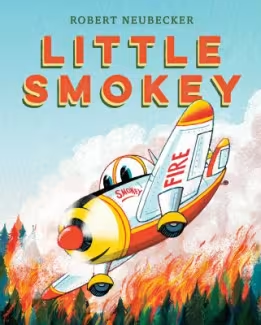
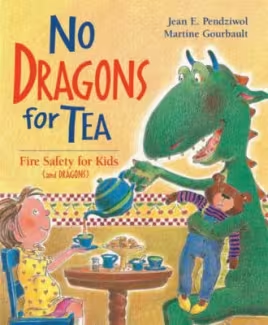
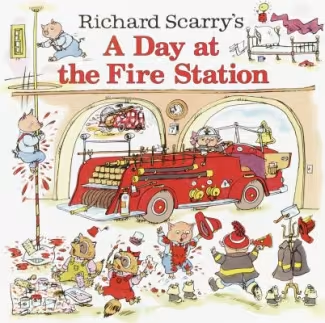
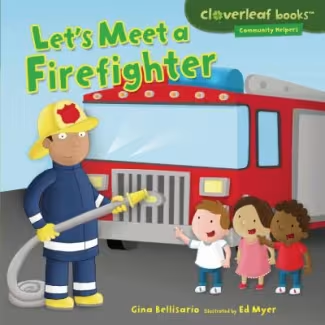
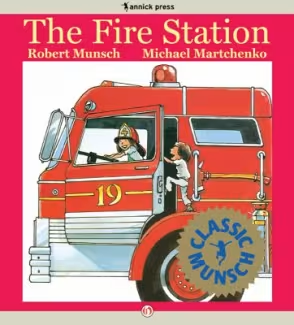
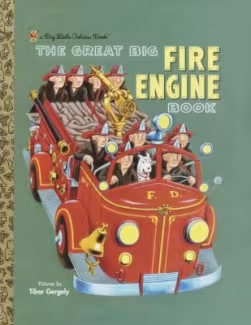
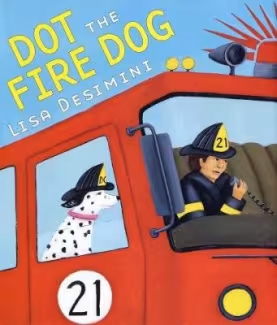
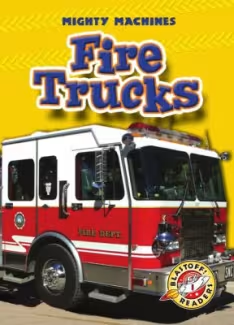
Below are book recommendations to share with kids to begin conversations about fire safety and books for adults on how to prepare for emergencies of all kinds.