Donald Shoup and the Promise of Parking


Picture this: A Friday night in L.A. You got last-minute tickets to see a game at the Staples Center (oops), I mean Crypto.com Arena. The tickets are free...but you need to get there by 5:30 p.m. Should you:
A: Uber or Lyft (stuck on the way back mired in surge pricing)?
B: Drive yourself and brave the 110, the 10, or the 5 in bumper-to-bumper traffic only to:
- Make endless circles around the venue in search of free street parking; fingers crossed for a Doris Day spot.
- Just pay for the $30+ fee for parking in the lot.
C: Ride your bike, take the bus, subway, or walk?
D: Stay home because L.A. traffic and parking sucks, and it's just not worth the hassle?
I usually pick B or D, but this is just one example of the heartache we L.A. folks must endure.
As a born and raised Angelino, I can attest to the fact that one of the most popular and frequent conversations we have is about driving. Not just driving, mind, but which route: main (Mapquest) or super secret in-the-know route, freeway or surface, and of course when you get to wherever you're going... where do we park? Is it free? Plentiful? Requires advanced notice? Street parking or a paid lot?
One man who tried his entire career to improve L.A.'s streets was Donald Shoup who passed away on February 6 at the age of 86. Shoup was a professor emeritus of urban planning at UCLA from 1974 to 2015. "Shoup popularized the theory that an 85% occupancy rate of on-street parking spaces would be the most efficient use of public parking. When cars at any given destination in a city (a block or group of blocks) occupy more than 85% of on-street parking spaces, then cars arriving at that destination are forced to circle the block for a few minutes in order to find an unoccupied parking space. This small search time per car creates a surprisingly large amount of traffic congestion because, typically, many cars are searching for parking simultaneously during peak driving times. This wastes time and fuel and increases air pollution."
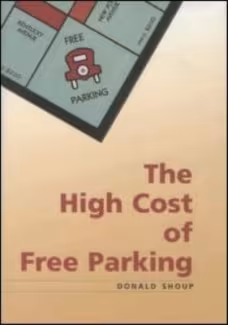
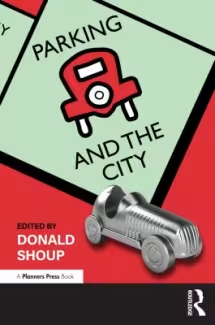
One could say he "wrote the book" on parking—he, in fact, did. The High Cost of Free Parking, first published in 2005 and revised in 2011 is the bible of urban planning. Shoup edited a follow-up book, Parking and the City, which also became an important resource.





So what was Shoup's solution for improving conditions? Simple. Start pricing parking on the street and stop requiring parking off the street. But nothing is ever that simple, and we've got an awful lot of cars.
With the Olympics approaching, I wonder if there will be a solution in time, or will it be a "Dodgers World Series level" parking traffic nightmare free-for-all at every Olympic venue?
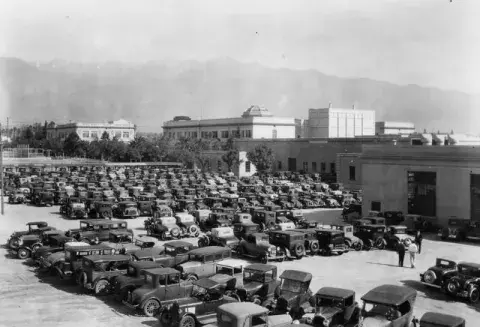
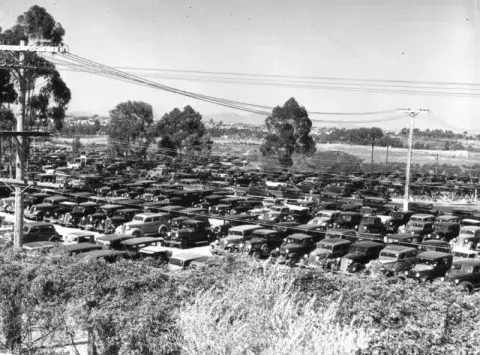
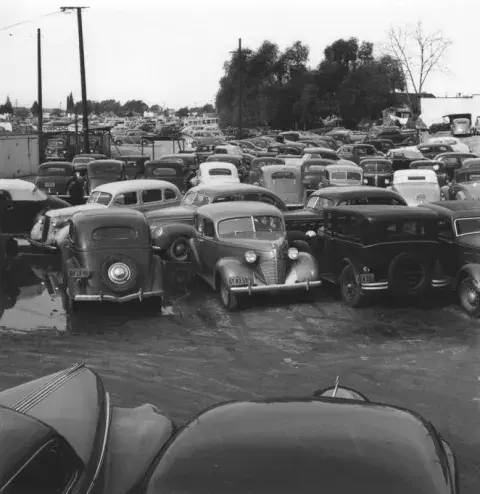
Take a look back at these images of parking lots from our collection, and decide for yourself.

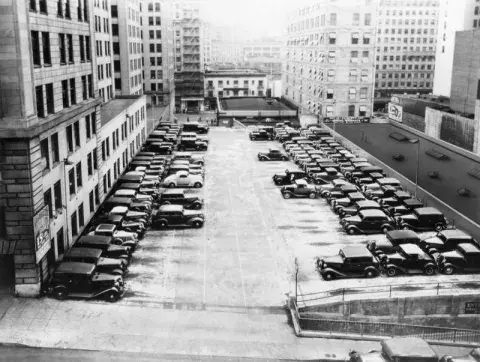
Even in 1905, there was a parking shortage! Now, where did I leave my horse... I know it's around here somewhere...I should have brought oats.


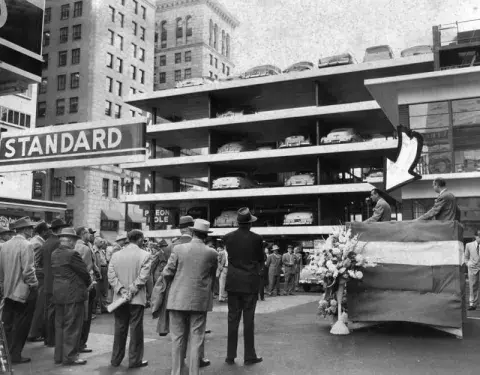
Look at the fun "auto"mated lots! Pigeon Hole Parking was supposed to be the latest and greatest in automated parking, but sadly, it wasn't that efficient and didn't last more than a decade.
Let's bring back the term "robot monitor." Way more fun than "pay station" or "exit terminal!"
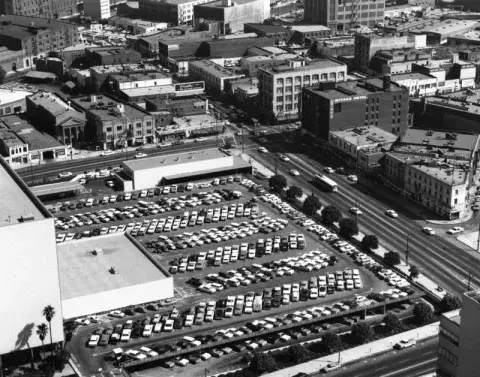
Was stacked parking ever a good idea? Just ask anyone who has ever braved the Hollywood Bowl or the Greek, or this terrifying lot by the Hall of Records in DTLA.
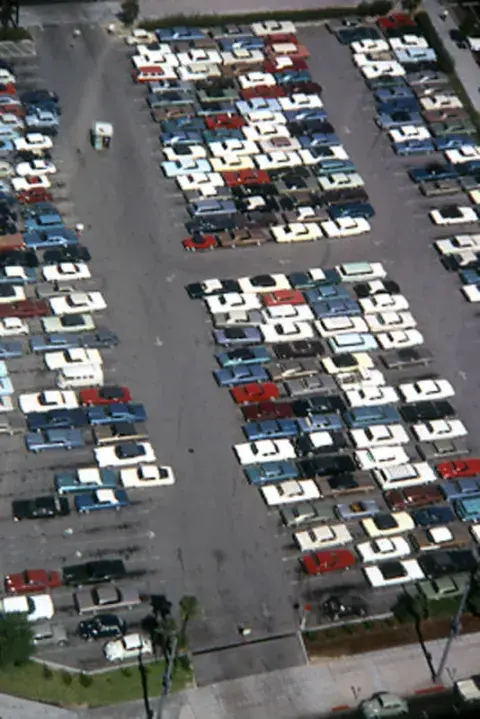
There's no date on this image, but it looks to be the 60s from the style of cars. And look how full that lot was! Did people leave early, even back then, to get out of the parking lot quicker?
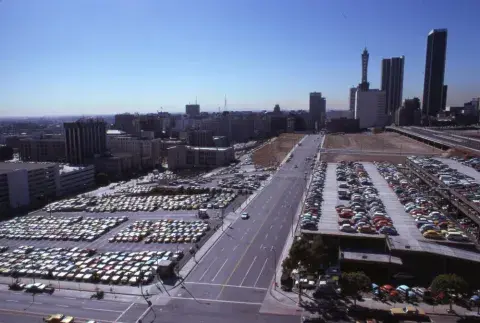
Designed by Charles Bentley as a low-cost and portable parking solution, the 1,062-space structure opened in 1969. It was never meant to last more than a couple of years, but like a Hannukah miracle, it stood another 49! It was demolished in 2018 to make room for "The Grand," a mixed-use development designed by Frank Gehry. Read more about it here.
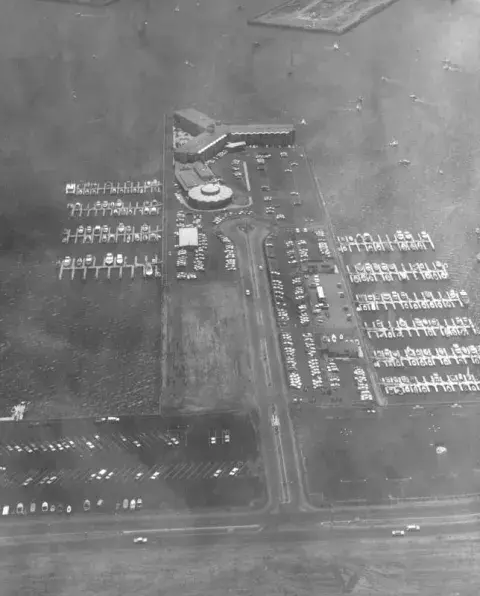
Even buses and boats need places to park!
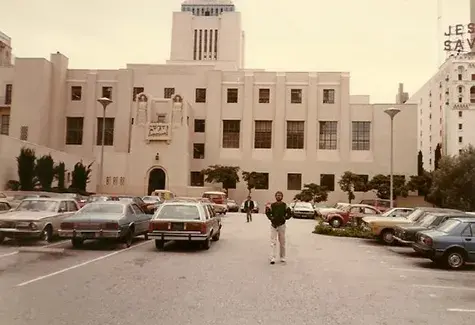
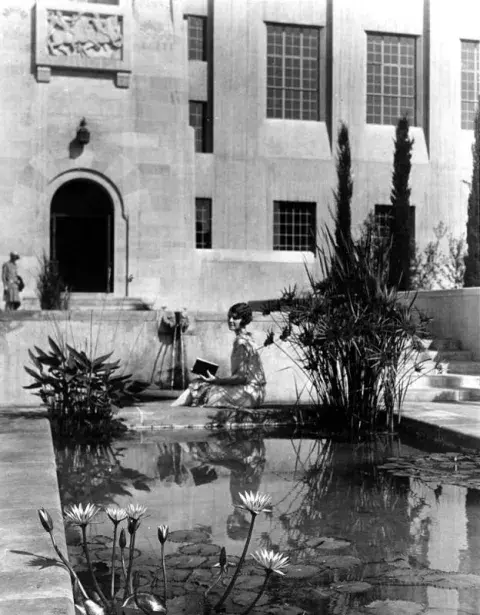
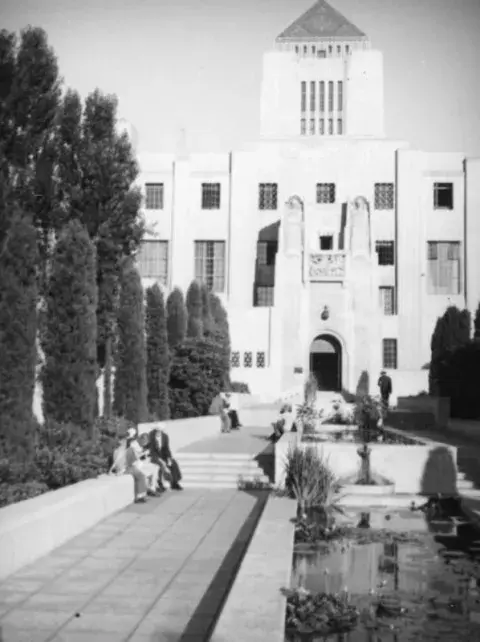
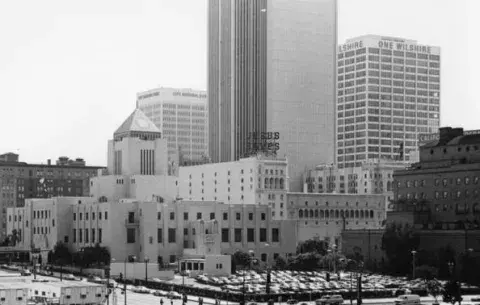
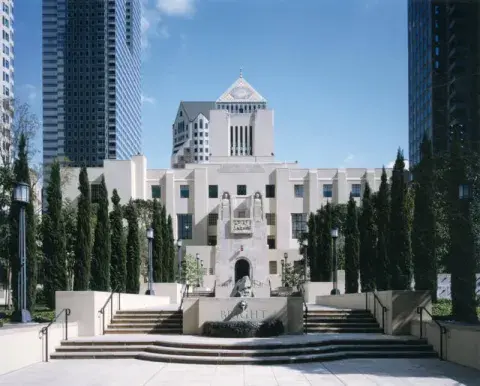
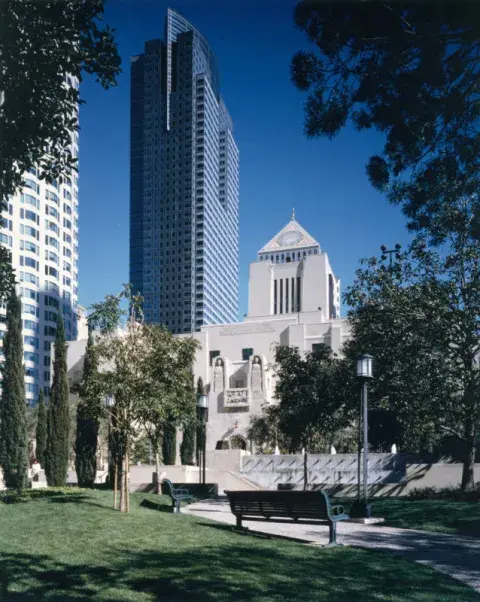
One final thought. Our very own Central Library started off with a beautiful park-like garden only to be paved over and downgraded to parking lot status, but like the phoenix she is, rose again after the devastating 1986 fire to provide a bucolic respite to our Downtown visitors who need a little bit of shade to read a book or just daydream about our wonderfully chaotic city.