A Look Back at Banned Book Week and the Prevalence of Soft Censorship
  • Published
  • Updated
Freed Between the Lines logo

As a follow up to Banned Books Week, which highlights books that are victim to outright censorship or removal from institutions, we want to also cast an eye on a quieter form of suppression.

Not all censorship arrives with targeted campaigns, official decisions, and subsequent news coverage. Sometimes it’s not the heavy stick, but the soft words slithering through schools and libraries that hurt the worst.

"Soft," "quiet" or Indirect censorship is when materials are removed by staff or never bought even though the community would be served by its addition. Moving books around to sections that don’t match their intended audience, not purchasing diverse books, and not inviting authors to speak can potentially harm both the community and the work of librarians and literacy.

The following authors and/or titles are reported to have been subject to either outright censorship or soft censorship.
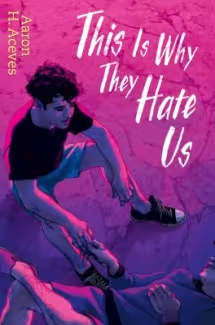
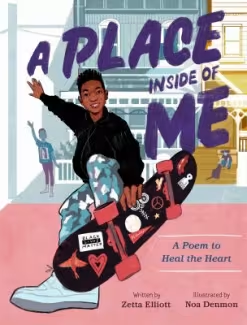
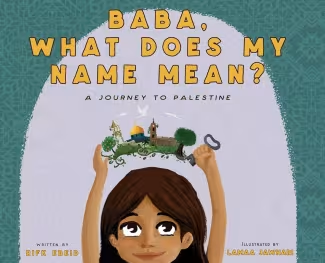
Cover image for This Is Why They Hate Us

This Is Why They Hate Us

A young adult book dealing with LGBTQIA issues, mental health, and more as Enrique tries and potentially fails to get over Saleem. Aceves speaks a lot about being true to yourself on his Instagram and for censorship to not deter one in search of their voice. The importance of queer books for queer kids to see themselves in cannot be overstated.

Cover image for Ida in the Middle

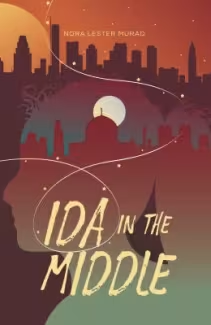
Ida in the Middle

Murad started researching censorship because she was worried her book would come under fire. Murad’s book is "loosely based on my youngest daughter’s junior year" about which she says, "I didn’t feel like they kicked me out because they had never included me in the first place."

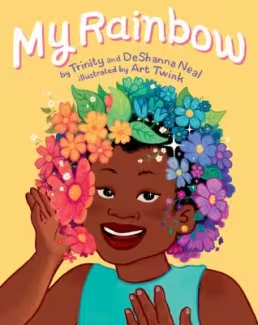
Cover image for My Rainbow

My Rainbow

Trans children deserve a voice and to see themselves on the pages, on the covers, and within the words of all books. My Rainbow, another story dealing with an author’s family, has been targeted.

Cover image for Love in the Library

Love in the Library

This author’s love letter to her grandparents, set in a Japanese incarceration camp where they met, was courted by Scholastic, but they wanted to remove the word "racism" and more from her author’s note. They wanted to erase a part of American history that deserves to be talked about, learned, and not repeated with the younger generations, along with actual history happening in the present day. The author could not do this to herself.

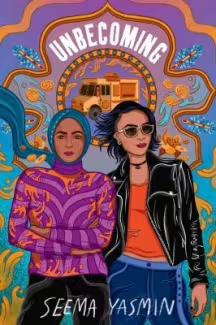
Cover image for Unbecoming: A Novel & Self-help Guide

Unbecoming: A Novel & Self-help Guide

The author’s first book, a Pride-themed picture book, has been censored by retailers and more, while her newest novel, a young adult book dealing with abortion access, was well received but learned that teachers and librarians will not carry it for fear of censorship.

There are those whose books may or may not come under fire, blending their voices to ensure that words are for everyone.

For example, Jacquetta Nammar Feldman’s Feldman's Upon the Same Stars is an accessible, hope-filled novel between two girls, a Palestinian and an Israeli. This Palestinian-Jewish author uses her voice to share her family's history and the family's divide.

Join us in the fight against censorship. Parents have the right to monitor what their children read, but they do not have the right to monitor what others read. The fight happens every day, not just during the week of celebration.