Which Witch is Which? Witches in History: Salem and Beyond


Over the years, the witch has become a popular figure and costume choice for our modern commercialized holiday rituals. And the stormy events of the Salem Witch Trials of 1692-3, which we tend to revisit around Halloween time, have become the inspiration for all sorts of mass-media entertainment; there are more serious attempts, but just saying: Love At Stake (1987). Salem itself has rebranded as the spooky Halloween fun capital of the country. Of course, there was nothing particularly Halloween-related about the original tragedy in colonial Massachusetts, in which a bizarre mass hysteria fueled by underlying socioeconomic turmoil and frontier clashes led a group of young girls to experience, or at least act out, spectral possession and accuse an ever-growing number of innocent community members of witchcraft, a craze that local leaders and tribunals somehow failed to stop. More than two hundred were accused, nineteen were hung, and one was pressed to death with heavy stones; at least five others died in jail before the madness finally burnt itself out in 1693. It was the culmination of a long era of ‘witch hunts’ in Europe and the colonies and a shattering moment of self-doubt for American governance—sidelining the more obvious forms of theocracy, if only temporarily. Formal apologies, reversals, and memorials have been issued since.
Though dozens of men were accused and five went to the gallows, the Salem Witch Trials were fundamentally an explosion of female power struggles (which quite overwhelmed the men ‘in charge’). The American witch is now definitively feminine. Whether vamping in sexy black mini dress or cackling in the green and warty mode popularized by Margaret Hamilton in the blockbuster Hollywood version of The Wizard of Oz (1939), witches are everywhere at Halloween, stirring cauldrons, riding broomsticks, and of course, rarely sans black cat. Hamilton’s Wicked Witch of the West is generally considered the cultural locus for the pointy witch hat, likely descended from the tall Puritan Capotain. The overlay of seasonal caricature tends to obscure a truer appreciation of witchcraft's evolving social role and witches, fairly or unfairly labeled—reviled and put to death in some times and places, seductive or celebrated for wisdom and power in others.
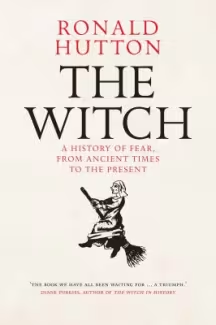
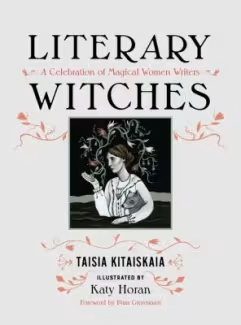
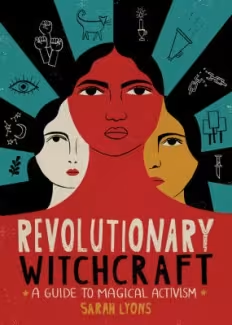
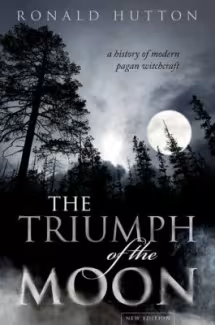
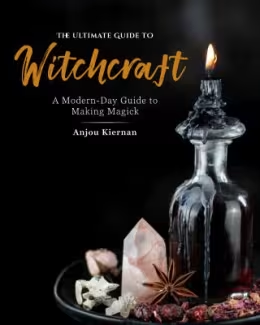
Witches predate the rise of modern science and medicine, just as Halloween is our modern expression of a pre-Christian Celtic sun festival celebrating the completion of the harvest and the end of Summer. Before there were medical doctors, there were folk healers, staving off disease and ill health with traditional remedies and rituals. Their power was largely home-and hearth-based, and thereby traditionally feminine—the broom or besom would have been used to clean an interior space to receive one seeking healing, long before the literary image of riding it through the night sky was conceived. Aged folk healers with magical faculties, in tune with invisible forces of nature, could be feared as well as revered, and the idea of the evil witch causing affliction at a distance came along with the good. As science confronted tradition in the West, magic was increasingly regarded as occult and fearful—other societies enjoyed a smoother integration or even coexistence of the two. This all came to a head in Salem, with accusations of witchcraft wildly hurled at innocents out of complex misfortunes, cementing the modern image of the evil witch. Older traditions lived on in the margins, and there is a growing resurgence of ‘good witchcraft,’ Wicca, and similar approaches among younger generations seeking ancient wisdom and a deeper connection to nature. Wiccans would be quick to distinguish themselves from Salem's terrors or the Halloween party witch, despite their commonality of origin. There are many resources in the library’s collection on the history of witches and witchcraft, from historical roots to modern-day Wiccans.
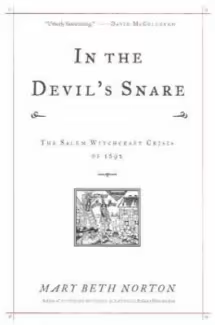
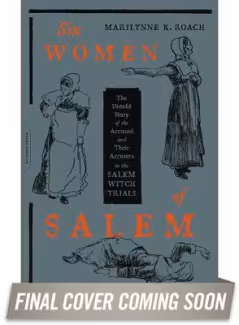
The savage clashes of the Salem Witch Trials themselves are so vivid, complex, and formative as to repay endless research and reinterpretation—to say nothing of their continuing resonance through American mass hysterias from the 1950s Red Scare right up to post-9/11 panic, which reanimates with eerie regularity from the fertile soil of American ignorance. They have birthed an ever-growing shelf of texts from Arthur Miller’s The Crucible to more recent investigations and novels, examining through lenses from politics to psychology, religion, race, economics, gender, and generation. A wishful 1692 ban on all writings about the witch trials by Massachusetts Governor William Phips, fearing that publicity would incite more widespread trouble, was immediately flouted by the publication of Cotton Mather’s Wonders of the Invisible World (1693). Quite a few of these are gripping and insightful, adding perspectives and layers to a surprisingly rich story. If you know only the basics, take one of these deeper dives, historical or fictive, for a truly eye-opening and blood-curdling read.
Some Histories

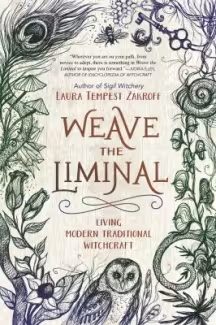
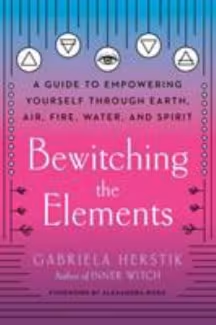
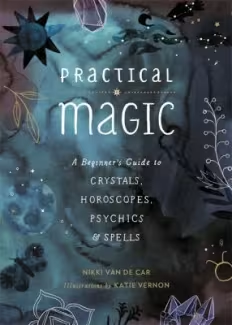
Modern Witches
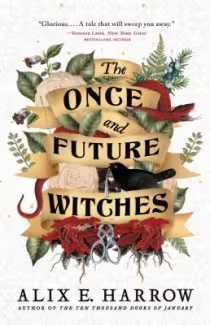
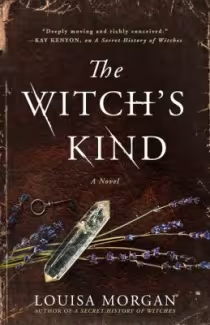
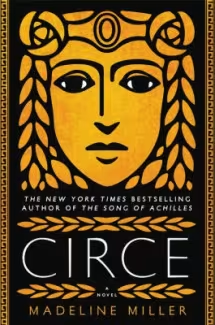
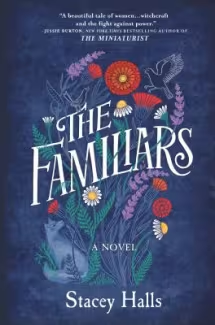
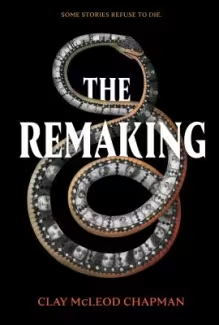
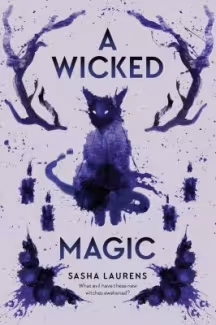
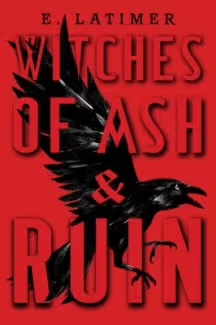
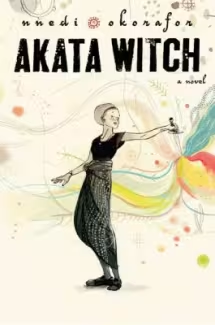
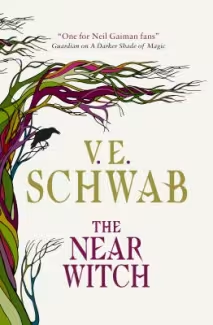
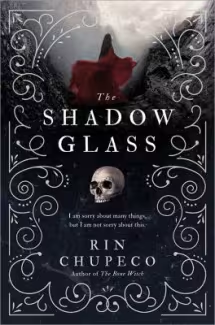
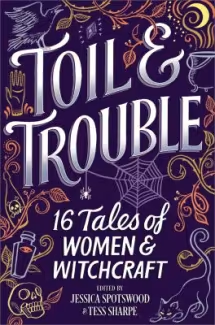
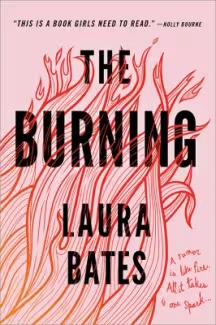
Witches in Fiction
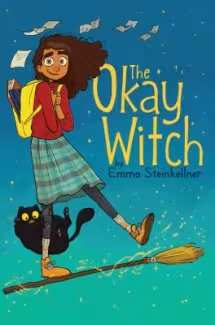
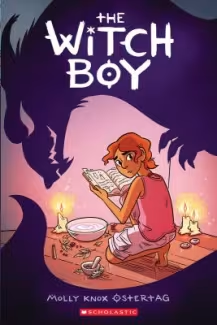
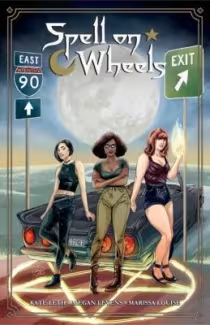
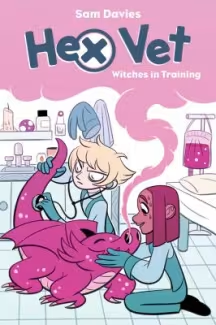
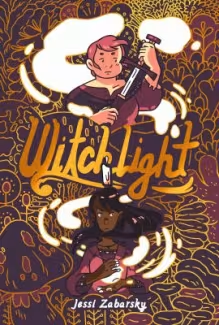
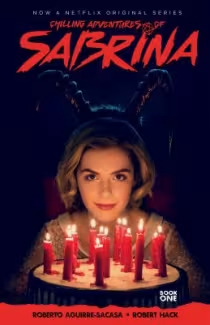
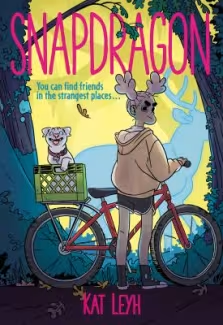
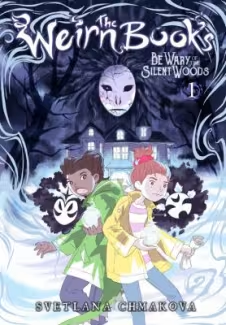
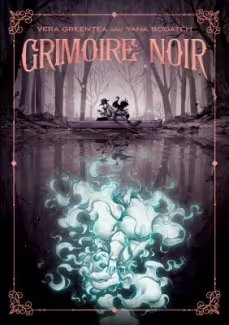
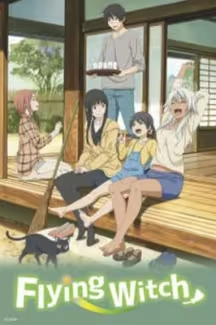
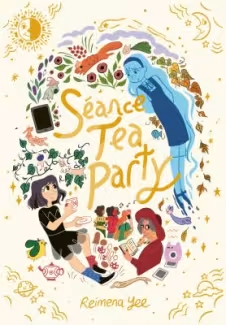
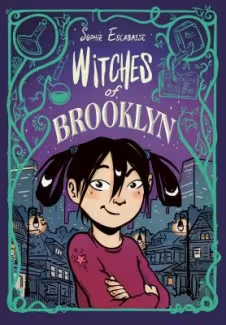
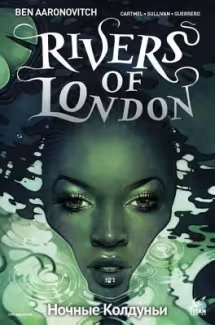
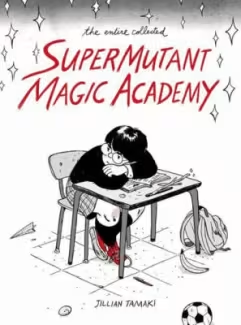
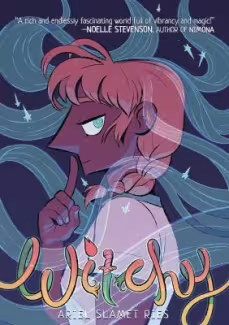
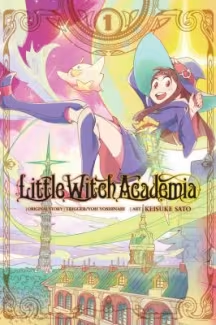
Editors note: There are so many excellent witch and witchcraft books in our collection, I've broken the lists into age categories. Also witches in graphic novels is its own category for the sheer volume of terrific titles. This is by no means a complete list, but I made sure to have my favorites here. Magic Lessons I'm thinking of you, and how you'll surely be on my year's top ten!—Tina Lerno