

Globe at Night
Why Do Scientists Study Light Pollution?
Scientists study light pollution to better understand how it impacts the climate and ecosystems in urban areas. The thousands of lights that illuminate cities today have been shown to raise average air temperatures, contributing to the harmful effects of climate change.
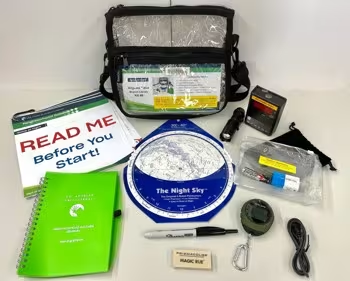
What's in the Kit?
- 1 sky quality meter (SQM)
- 1 red LED light flashlight
- 1 planisphere (stargazing chart)
- 1 mini GPS location finder
- 1 USB charging cable
- 1 spare 9V battery
- 1 spare AA battery
- 1 sharpie
- 1 eraser
- 1 observation journal
- Safety rules
How to Help Scientists Collect Data?
Step 1
If you have a smart device, turn on the GPS feature. You can also use Google Maps or download a free GPS-Map app for your iOS Apple or Android device.
If you don't have a smart device, use the Mini GPS tracker included in the kit for location coordinates and elevation information. Press and hold the middle button to turn on the GPS and give it 8-15 minutes to connect to a satellite. When connected, the screen will display a signal icon with bars and a blinking black bullet. Press the top button three times to see the coordinates and two more times to see the elevation information measured in meters. Press and hold the middle button to turn the GPS off.
Step 2
On a night when the moon is not high, at least an hour after sunset, go outside to a clear spot with your Sky Quality Meter (SQM), your planisphere/constellation guide, and your red LED flashlight to protect your night vision. Make sure to write down the serial number of your SQM for when you are submitting your data.
Step 3
With the sensor/faceplate pointing towards the sky, push the red button on your SQM once and wait as it takes its reading. Once it’s finished, be sure to take note of the measurement or record the measurement on the data card.
Step 4
Using your planisphere and the Observe tab on the Globe at Night website to locate the constellations suggested in the Globe at Night Dates and Constellations section based on the date of your observation.
Step 5
Go to the Globe at Night website to enter the data you collected from your observation. Allow the webapp to use your current location.
Step 6
Be sure to put all equipment, supplies, and the instruction packet back into the bag and return the kit to the library so someone else can contribute.
Globe at Night Curriculum
Lessons
Lessons are short moments of NGSS (Next Generation Science Standards)- aligned direct instruction, delivered in video or slide format, that inform participants of the knowledge necessary to participate in Citizen Science activities.
Activities
Activities frame moments of Citizen Science participation through hands-on exploration and creation, including using the Neighborhood Science kits to collect data.