¿Tuyo? ¿Mío? ¿Nuestro? ¡Sí! Lo llamamos cocina americana.

  • Published
  • Updated
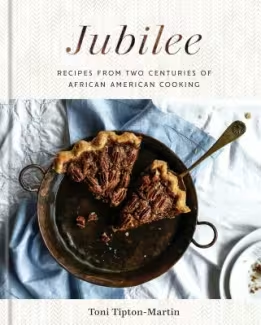
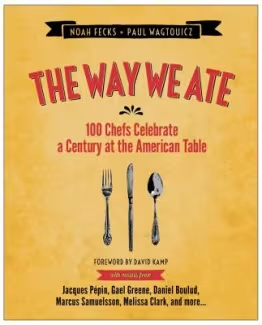
Collage of American cuisine books

Aparte de los pueblos indígenas, somos una nación de inmigrantes, tanto los que vinieron por elección propia como los que llegaron por la fuerza. A medida que nuestro país crece y cambia con la llegada constante de nuevas personas, nuestra alimentación también cambia. Al igual que nuestro país, la gastronomía estadounidense nunca es estática. Es interesante y emocionante, y refleja la gran y rica diversidad que la hace suya, mía y nuestra. La gastronomía estadounidense es el mundo, aquí mismo, en nuestras mesas.

Algunas reflexiones sobre la comida estadounidense provienen de una de nuestras reinas culinarias, Julia Child. En una de sus últimas entrevistas, le preguntaron por su comida favorita, ¡y qué sorpresa! Elogió un sándwich de tomate hecho con un tomate en rodajas sabrosas, sobre pan blanco, untado generosamente con buena mayonesa y espolvoreado con sal y pimienta. Ella y Jacques Pépin, un inmigrante francés, presentaron un programa de televisión completo sobre la hamburguesa. Tras un buen bocado de una hamburguesa contundente, repleta de tomate, lechuga y otros ingredientes, Julia declaró: «Buena comida estadounidense».

Para las vacaciones y celebraciones de verano, muchos nos reuniremos en persona, o quizás virtualmente, y compartiremos todo tipo de comidas. Las siguientes se han convertido en parte de las comidas tradicionales para las festividades de verano: hamburguesas , perritos calientes , ensalada de papa, ensalada de col, papas fritas con salsas, helado, tartas, pasteles, galletas, sandía, cerveza fría y refrescos fríos. Hay muchas otras cosas buenas para comer, muchas más de las que se pueden enumerar. Por lo tanto, ofrecemos una breve lista de libros sobre nuestra historia gastronómica y animamos a todos a consultar el catálogo de la biblioteca para obtener más información.
El mundo, aquí mismo en nuestras mesas


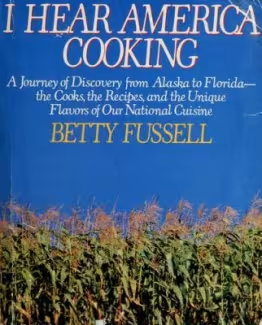
Cover image for I Hear America Cooking

I Hear America Cooking

Betty Fussell gives us recipes and history about the foods we eat, and some of the people who created them. “This cultural and culinary smorgasbord offers a tasty collection of recipes as well as a great slice of Americana.”

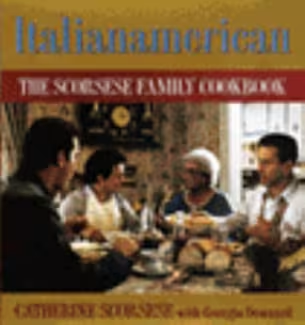
Cover image for Italianamerican: The Scorsese Family Cookbook

Italianamerican: The Scorsese Family Cookbook

Many years ago, I discovered this book while browsing the shelves of our great cookbook collection at Central Library. Not to slight the numerous ethnic contributions to American cuisine, this book is for your amusement and edification. “Catherine Scorsese's tomato-and meat sauce was probably the only recipe ever to receive full billing in the credits of a movie when Martin Scorsese starred the sauce and his parents in Italianamerican, his favorite of all his films. Now, for the first time, all the recipes from the family have been written down for this cookbook, with photos and anecdotes that tell the story of three generations of Scorseses.”

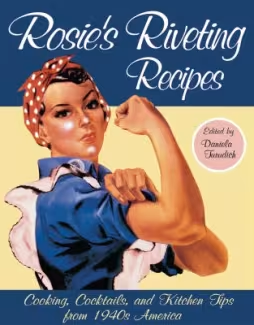
Cover image for Rosie's Riveting Recipes

Rosie's Riveting Recipes

Recipes and ideas from the 1940s, when men went off to war, and women worked men’s jobs and managed to feed their families...The women created balanced meals and desserts with rationed food and limited time.

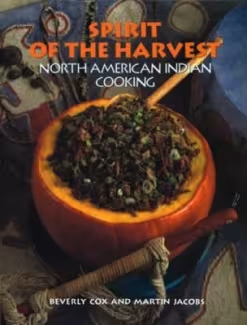
Cover image for Spirit of the Harvest: North American Indian Cooking

Spirit of the Harvest: North American Indian Cooking

This book covers the specific cuisines of Native Americans of North America. The foods are divided into geographic regions: southeastern coast and woodlands; northeastern coast and woodlands; Great Plains; the southwest; and the west. Lavishly illustrated with color photographs and black and white drawings of symbolic designs.

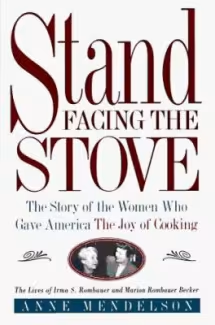
Cover image for Stand Facing the Stove

Stand Facing the Stove

The Joy of Cooking, in its many editions, is the American bible of cooking. It has changed over the years and is now more than a how-to cookbook. The newer editions encompass and acknowledge the diversity of American cuisine. This is the biography of Irma Rombauer, who wrote the first edition, which almost did not happen.