Observación de estrellas: mirando hacia arriba

  • Published
  • Updated
Looking up at the dark, starry night sky with a telescope

Recuerda mirar hacia las estrellas y no hacia tus pies. Stephen Hawking

El astrofísico e ícono cultural Stephen Hawking compartió esta recomendación en una entrevista de 2010 con Diane Sawyer, de ABC News, como el primero de los "consejos más importantes" que les había transmitido a sus tres hijos. En un discurso posterior, el profesor Hawking reiteró y profundizó en esta idea:

Recuerda mirar las estrellas y no a tus pies. Intenta comprender lo que ves y pregúntate qué hace que el universo exista. Sé curioso. Y por difícil que parezca la vida, siempre hay algo que puedes hacer y lograr. Es importante que no te rindas. Mientras haya vida, hay esperanza. Stephen Hawking

Si bien la mayoría de nosotros nunca enfrentaremos el nivel de adversidad que tuvo que enfrentar el profesor Hawking a lo largo de gran parte de su notable vida, todos nosotros, nuestras comunidades y el mundo entero nos enfrentamos a amenazas reales y presentes a nuestra propia salud y a límites cada vez mayores a nuestro movimiento.

Si tomamos en serio el consejo sorprendentemente espiritual y optimista de Hawking en nuestra situación actual, descubriremos que mirar las estrellas es algo que aún podemos hacer sin pedir permiso a nadie ni correr riesgos innecesarios. Es algo que también podemos recomendar a nuestros hijos para inspirarles la curiosidad por lo que hace que el universo exista.

La siguiente es una selección de libros electrónicos disponibles en la biblioteca, accesibles desde cualquier lugar con su tarjeta de biblioteca, sobre cómo observar las estrellas, ya sea con binoculares o a simple vista.
Lista de medios de astronomía y observación de estrellas


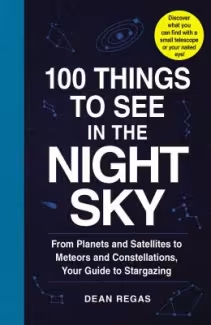
Cover image for 100 Things to See in the Night Sky

100 Things to See in the Night Sky

Author Dean Regas has been Astronomer for the Cincinnati Observatory since 2000. He is the author of two other books on popular astronomy and co-host of the television series Star Gazers. This book is recommended by authoritative sources such as Astronomy Magazine for readers 10 and up.

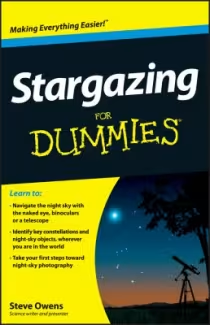
Cover image for Stargazing for Dummies

Stargazing for Dummies

Part of the enduringly popular series, it includes many of its familiar features and fun, casual presentation. The book includes information on buying binoculars or a telescope, and even photographing the night sky. Includes details about what items in the sky are viewable with the naked eye and which require magnification.

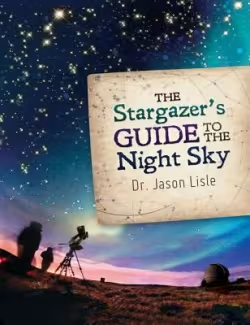
Cover image for The Stargazer's Guide to the Night Sky

The Stargazer's Guide to the Night Sky

 Written from a Christian perspective by a Ph.D. in astrophysics for the interested reader to “better enjoy God's amazing night sky.” The book includes 150 full-color constellation charts and a “Stargazer's Planisphere,” a chart that helps locate the positions of stars on any night of the year. Recommended for readers 10 and up.

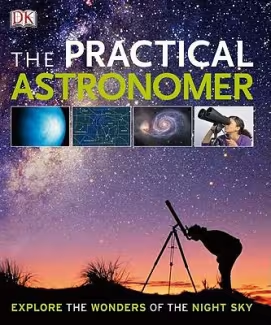
Cover image for The Practical Astronomer

The Practical Astronomer

The subtitle for this book is Tips and Tools for Observing the Night Sky. It includes information on how to build and use a reflector telescope. For the more technically adept amateur astronomer, the book includes information on adapting your laptop, using a telescope and even astrophotography.

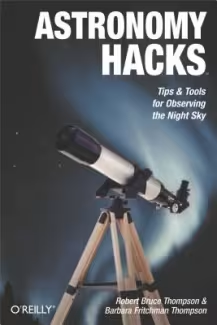
Cover image for Astronomy Hacks

Astronomy Hacks

The subtitle for this book is Tips and Tools for Observing the Night Sky. It includes information on how to build and use a reflector telescope. For the more technically adept amateur astronomer, the book includes information on adapting your laptop, using a telescope and even astrophotography.

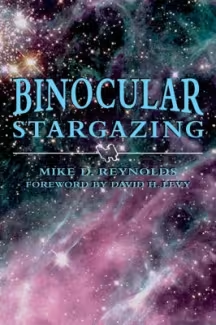
Cover image for Binocular Stargazing

Binocular Stargazing

The title says it all: A Guide to Stargazing Through Binoculars. While the shopping guide and recommendations for buying binoculars are now probably out of date (ca. 2005), the explanations of what to look for in each season will still be accurate. The author, who passed last year, was the former Executive Director of the Chabot Space Center in Oakland.

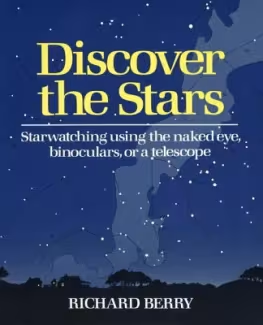
Cover image for Discover the Stars

Discover the Stars

The subtitle for this book is Starwatching Using the Naked Eye, Binoculars, or a Telescope --which also says it all. The book describes all celestial objects that are viewable by the naked eye and introduces deep-sky objects that can be seen with binoculars or a telescope. The book received a very positive review in School Library Journal as a resource for young adults.

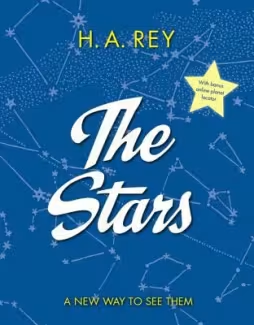
Cover image for The Stars, a New Way to See Them

The Stars, a New Way to See Them

Another children’s book, with a recommended age range of 12 and up. The author may be familiar to readers as co-author of the beloved children’s classic Curious George. The focus of this book is constellations. It is full of illustrations and charming cartoons drawn by the author.