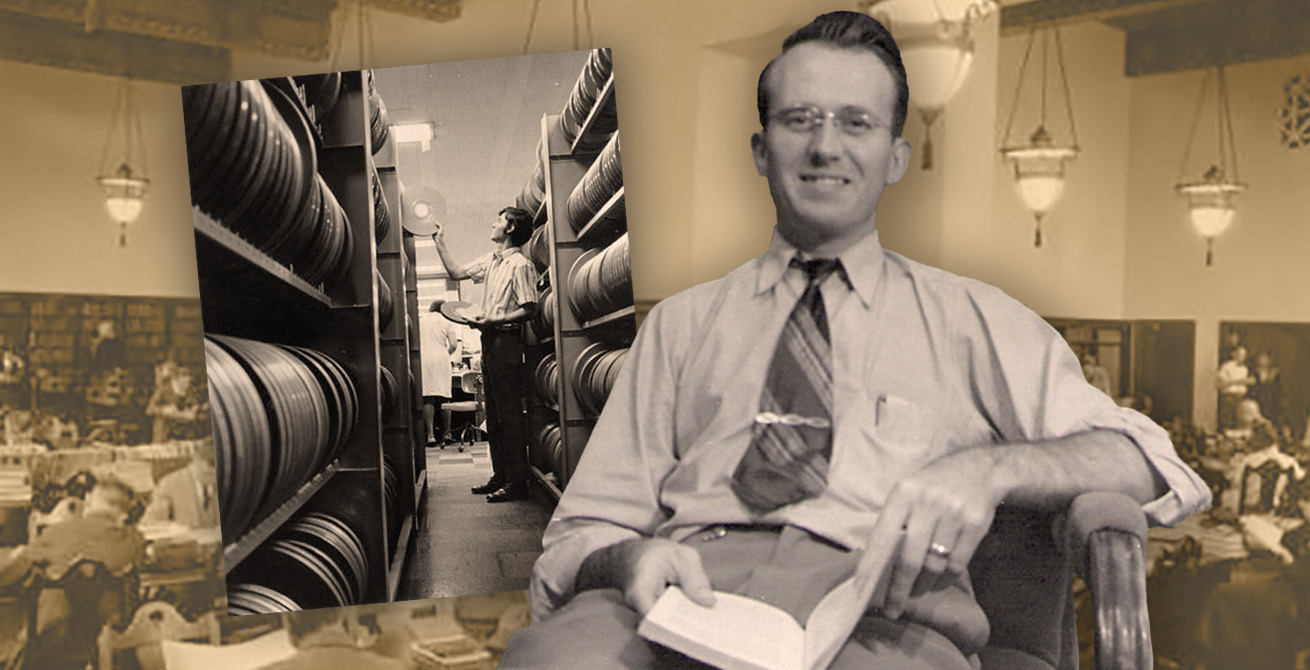
Los Angeles Public Library is celebrating 100 years of the Central Library, making this the perfect time to spotlight the exceptional librarians who have overseen this remarkable building and everything within: its collections, programs, services, and staff. Over several weeks, we're highlighting the individuals who have served as Director of Central Library.
In Part 1 of this series, we learned about the first three librarians who ran Central Library in the years spanning 1926 to 1950: Helen T. Kennedy, Althea H. Warren, and Anne F. Leidendeker. Although the Central Library director position that we know today had not yet been formally established, these librarians oversaw the operation of Central Library within their roles in library administration.
As of now, we haven't uncovered any details about who managed Central Library throughout the 1950s, although it likely continued to be overseen by an assistant city librarian. By the 1960s, however, the library system had grown so much that it became necessary to add more management positions. In January 1961, two librarians were promoted to the newly created Division Librarian position: one to direct Central Library and the other to direct the branch system.
John Bernhill Phillips was chosen as the first designated Central Library director. At the time of this promotion, Phillips was a seven-year veteran of the Los Angeles Public Library. Like the three librarians referenced above, Phillips was originally from the Midwest. Born in 1921, he grew up in Kewanee, Illinois. Although quite intelligent, he was not particularly motivated in school.
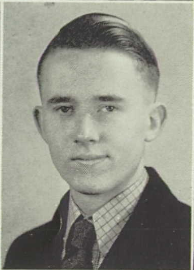
In 1940, Phillips came to California to attend the Aero Industries Technical Institute in Los Angeles, where he completed a course to become a combination airplane craftsman. He then worked as an installation mechanic at the Consolidated Aircraft Company in San Diego until November 1942.
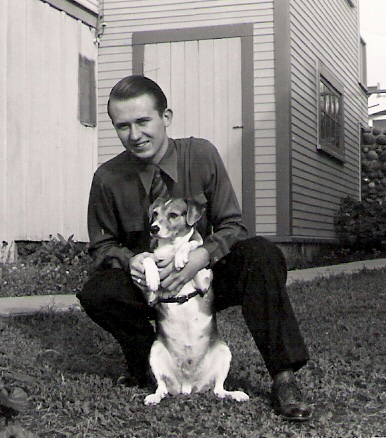
During World War II, Phillips enlisted in the Army Air Corps and served as an airplane armorer in England, France, Belgium, and Germany. Lifting heavy munitions into aircraft proved difficult due to his slight build, so he was often tasked with odd jobs like tending bar.
Phillips' military service qualified him for the GI Bill and the opportunity to attend college. He attended the University of Southern California, where he earned a BA and then an MSLS (Master of Science in Library Science). In one class, students were seated in alphabetical order, and Phillips found himself sitting next to Kathy Powers. They were married a few months later during the semester break, on January 31, 1950.
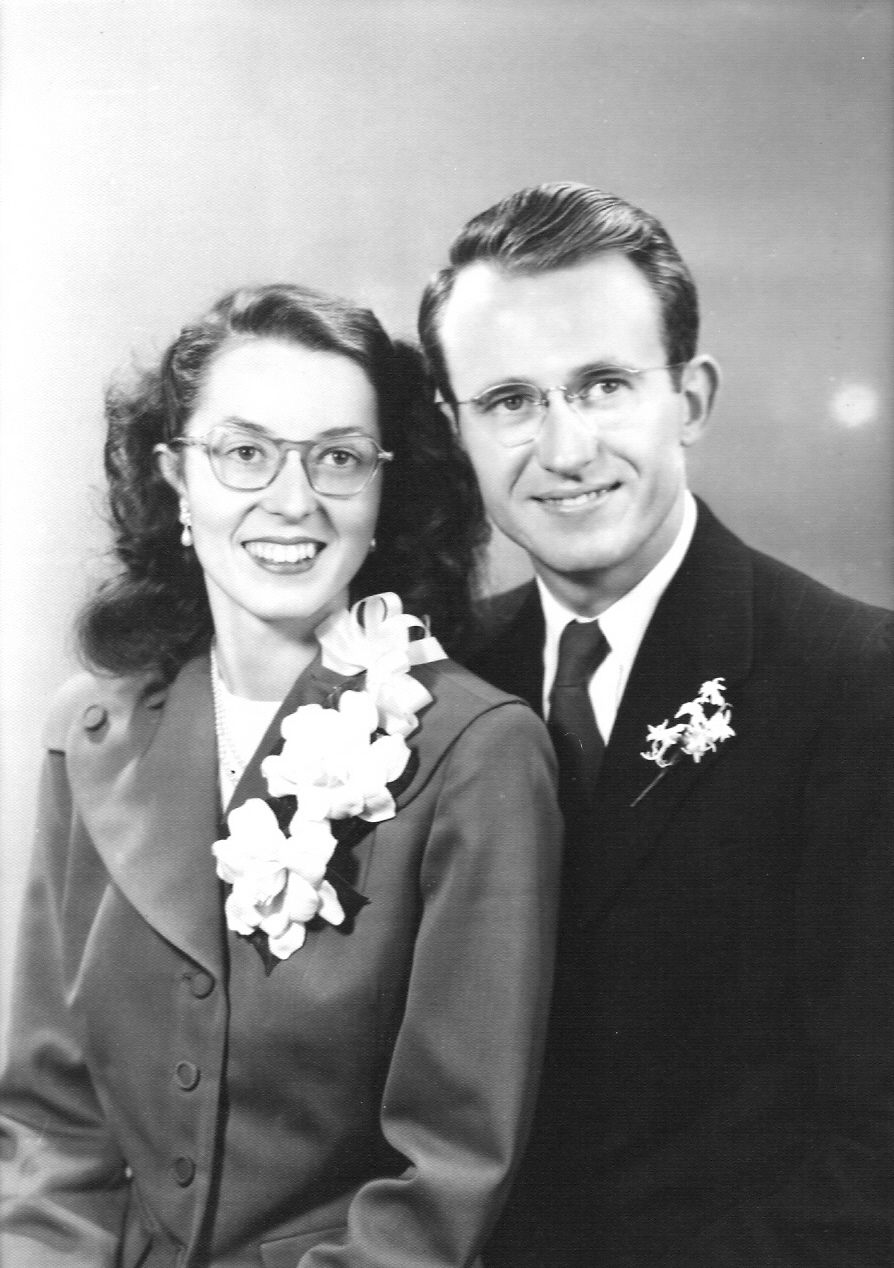
After his 1950 graduation, Phillips worked as a cataloger at the USC Library. He was then hired by the Los Angeles Public Library in June 1953 and worked as a reference librarian at the Felipe de Neve Branch Library. During this time, Phillips' wife, Kathy, was also employed by the Los Angeles Public Library, working as a librarian in Central Library's Science & Industry Department. She left work permanently in 1955 upon the birth of their daughter, Karen.
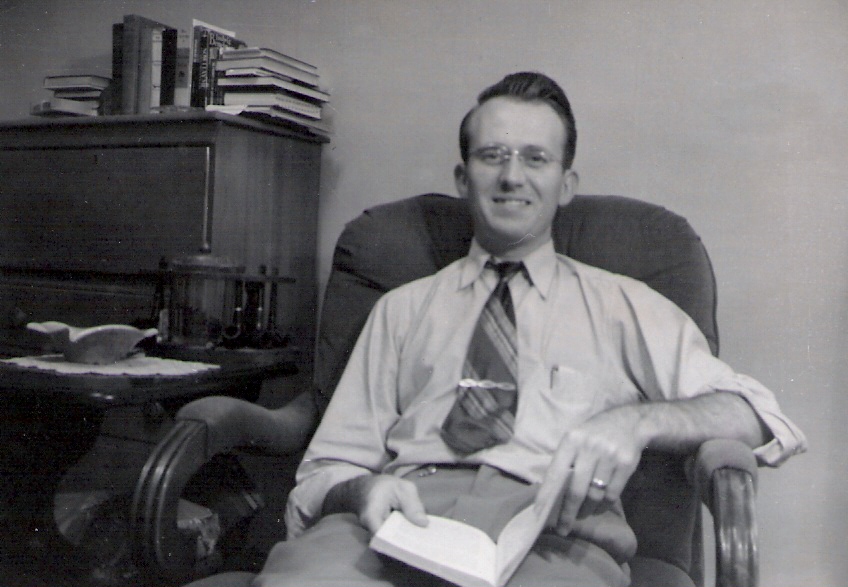
In December 1955, Phillips was promoted to senior librarian at the Vermont Square Regional Library, where he worked under the direction of notable librarian Miriam Matthews. Two years later, he transferred to the Mar Vista Branch Library. Then, in January 1960, he moved downtown to Central Library, transferring into the position of senior librarian in the administration office. This position, also referred to as the administrative research librarian, doesn't exist today, and we don't know exactly what it entailed—although we wish we did!
One year later, Phillips became Central Library director. The staff union newsletter, The Broadcaster, referred to him as "Director of Central Subject Departments," although he also supervised non-subject departments, such as cataloging and bookbinding. While Phillips held the position for a short time—just under two years—some noteworthy developments occurred at Central during his tenure.
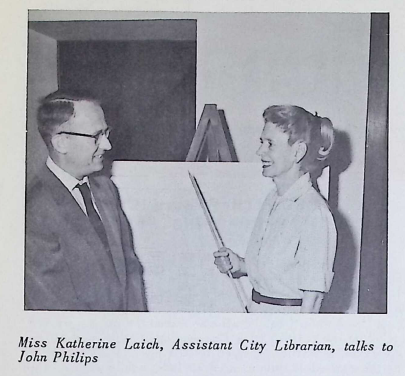
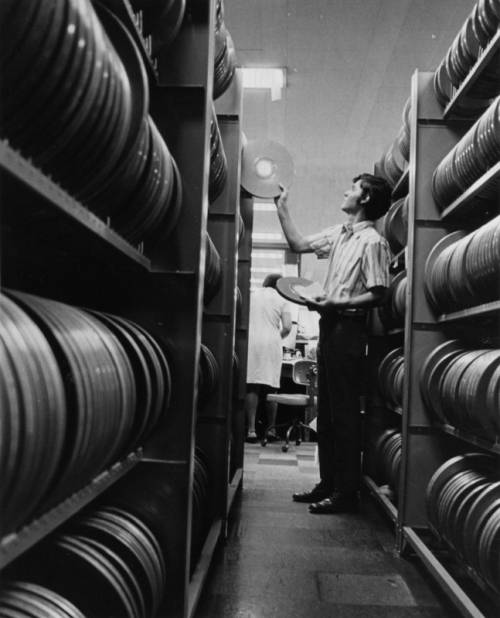
In June 1961, a special phone line was set up for patrons seeking numbers and addresses from Central Library's nearly 7,000 U.S. city and foreign telephone directories. This was necessary because such requests were coming through the regular phone line at a rate of 38 questions per hour. In July 1961, the Audio-Visual Service became the Audio-Visual Department, and its 900-plus films could now be delivered for pickup at larger branches, saving patrons a trip downtown. Films on space and space travel were especially in demand.
That same month, the Foreign Department reached a milestone of 100,000 books across 25 languages, with French being the most popular. Demand for foreign-language materials was very high, and Central Library placed more emphasis on acquiring books in that area. Other high-demand subjects included Zen Buddhism, existentialism, and hypnotism, as well as controversial materials in communism, politics, and criminal methods. Heavy losses of popular books meant patrons often had to sign for their use and occasionally place a deposit.
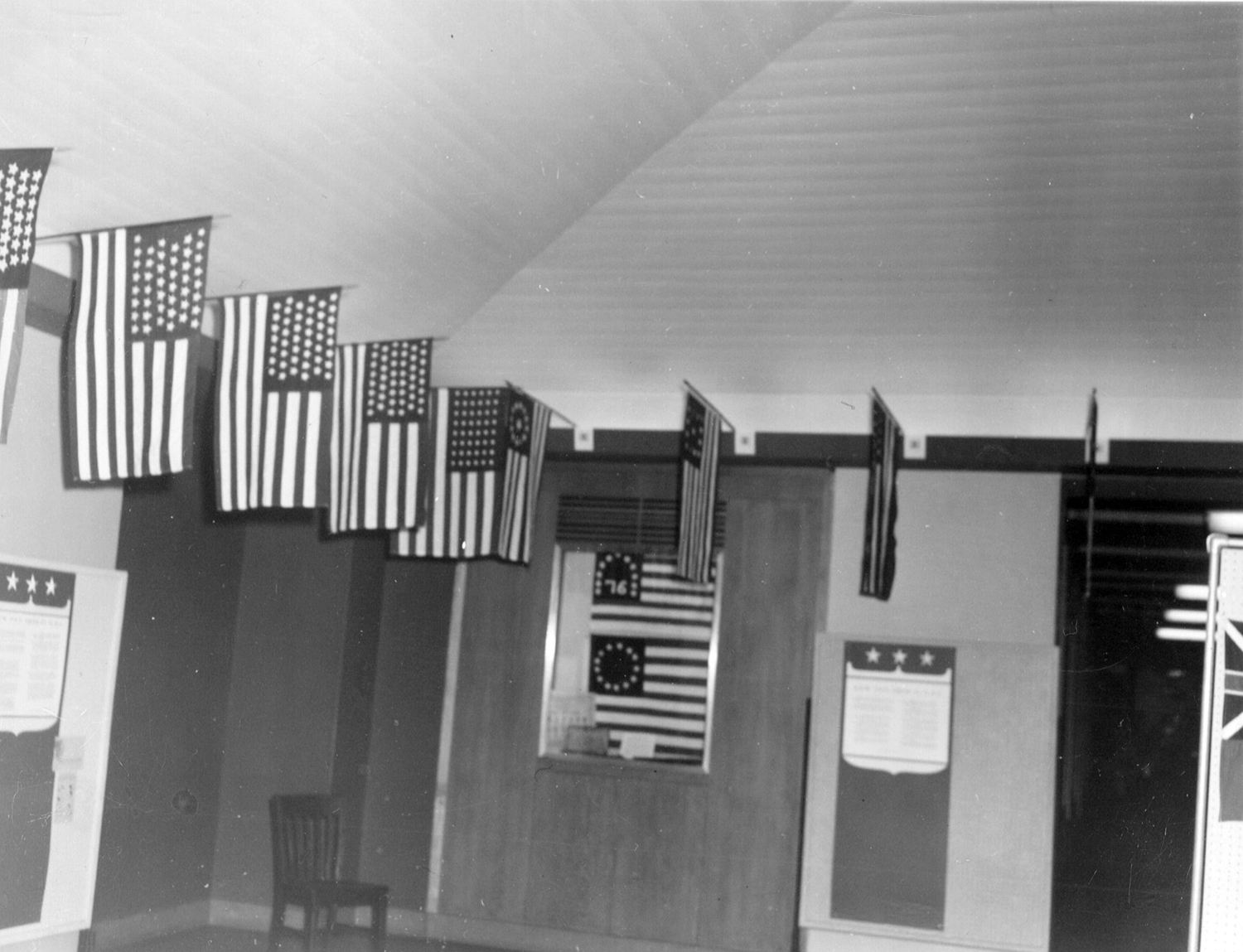
In June 1962, Phillips promoted a new exhibit, "What So Proudly We Hail: American Flags 1777–1962," to the press. A month later, the Mary E. Foy California Room debuted, featuring Central Library's specialized collection of California history materials. Named after the third city librarian and first woman to hold the position, the room was established on what would have been Foy's 100th birthday. (Note: The room was not included in the library's 1993 redesign; the space now houses the Children's Literature Department.) In October 1962, Central Library aimed to improve its newspaper services by consolidating and moving all periodical material into one location, and installing four new readers for the nearly 5000 reels of microfilm.
By December 1962, Phillips had departed Central Library, and a nationwide search for the next director was underway. Phillips continued with the Library at the Mark Twain Branch, where local newspapers frequently printed his book recommendations. The exact reasons for what was essentially a demotion are unknown. However, for those who knew Phillips, this move was likely self-imposed. He was not a "money guy" and did not place much value on climbing the career ladder. Not one for management, he loved reference work—something that a library administrator rarely, if ever, has the opportunity to do. The Phillips family moved to Simi Valley in 1968, and from then on, he worked at the West Valley Regional Branch Library to reduce his commute.
Throughout his life, Phillips was an avid reader of books, newspapers, and magazines—unsurprising for a librarian. He had an interest in history and contributed to the Simi Valley Historical Society. He loved music, especially Beethoven, and played a bit of violin. He and his daughter sometimes had violin—piano duels. A frugal, DIY type, he enjoyed woodworking and making improvements to his property. Phillips was a reserved man with few close human friends. He loved dogs and had a series of canine companions throughout his life, including Duke, Falstaff, Charley, and Bonnie.
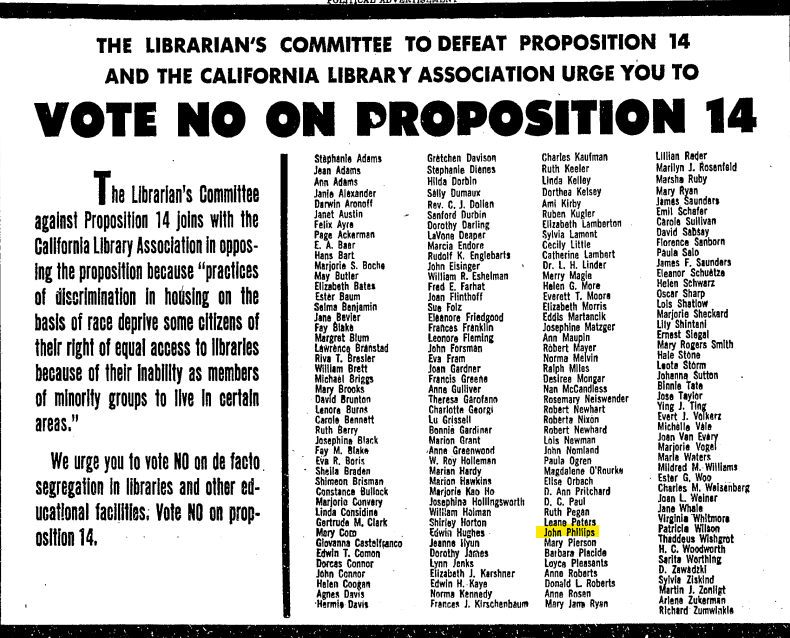
Phillips' daughter credits him with instilling many good values in her. A small glimpse of his values are shown through his involvement in the Librarians Committee to Defeat Prop 14. This proposition was meant to overturn the Rumford Fair Housing Act and effectively codify racial discrimination in housing into California law. Phillips' name appears in a November 1964 Los Angeles Times advertisement from the group urging a "No" vote. While the proposition did pass, it was eventually invalidated by the United States Supreme Court for violating the 14th Amendment.
Phillips took relatively early retirement after developing rheumatoid arthritis at age 50. His health improved after several years, however, and he enjoyed a long retirement. In their later years, Phillips and his wife moved to a retirement home in Orange County. He passed away on March 20, 2008.
Check back next time to find out who followed John Phillips as the second official director of Central Library.
Information for this blog post was largely pulled from the following databases: California Index, Los Angeles Area Historical Newspapers, and Los Angeles Times Historical Archives. These and more are available to patrons at the Research & Homework webpage.
Special thanks to Karen (Phillips) Carlson, who provided details and photos for this post.